As a Senior Engineering Director with over 15 years of experience in industrial equipment design, production, and optimization, I have overseen countless projects where the choice between linear rails and linear rods directly impacted equipment performance, reliability, and total cost of ownership (TCO). Linear rails (also called linear motion rails, linear guide rails, or linear slide guide rails) and linear rods (also known as linear shafts, linear guide shafts, or linear slide shafts) are both core components for linear motion systems, but they are not interchangeable—each excels in specific scenarios, and misselection can lead to costly rework, premature failure, or underperformance. This is especially critical when evaluating linear rails and bearings, linear rods and bearings, or linear bearing rail systems, as these component pairings define motion system capability. In this article, I will break down the fundamental differences between linear rails and linear rods, explore what is a linear guide and what is a linear bearing, and detail performance trade-offs, application boundaries, and key selection principles from an engineering leadership perspective—helping teams make strategic, data-driven decisions that align with project goals, whether selecting linear rails for CNC, heavy duty linear guide rails, or affordable cheap linear guide options.
The Core Difference
To understand when to choose one over the other, we must first ground ourselves in their design philosophies—differences that dictate their performance limits and application suitability. As engineering leaders, we do not just select components based on “what works”; we select based on “what works best for the system’s entire lifecycle,” whether evaluating linear guide bearings, linear bearing guides, or ball bearing carriages and guide rails.
What is Linear Rails (Linear Guides)?
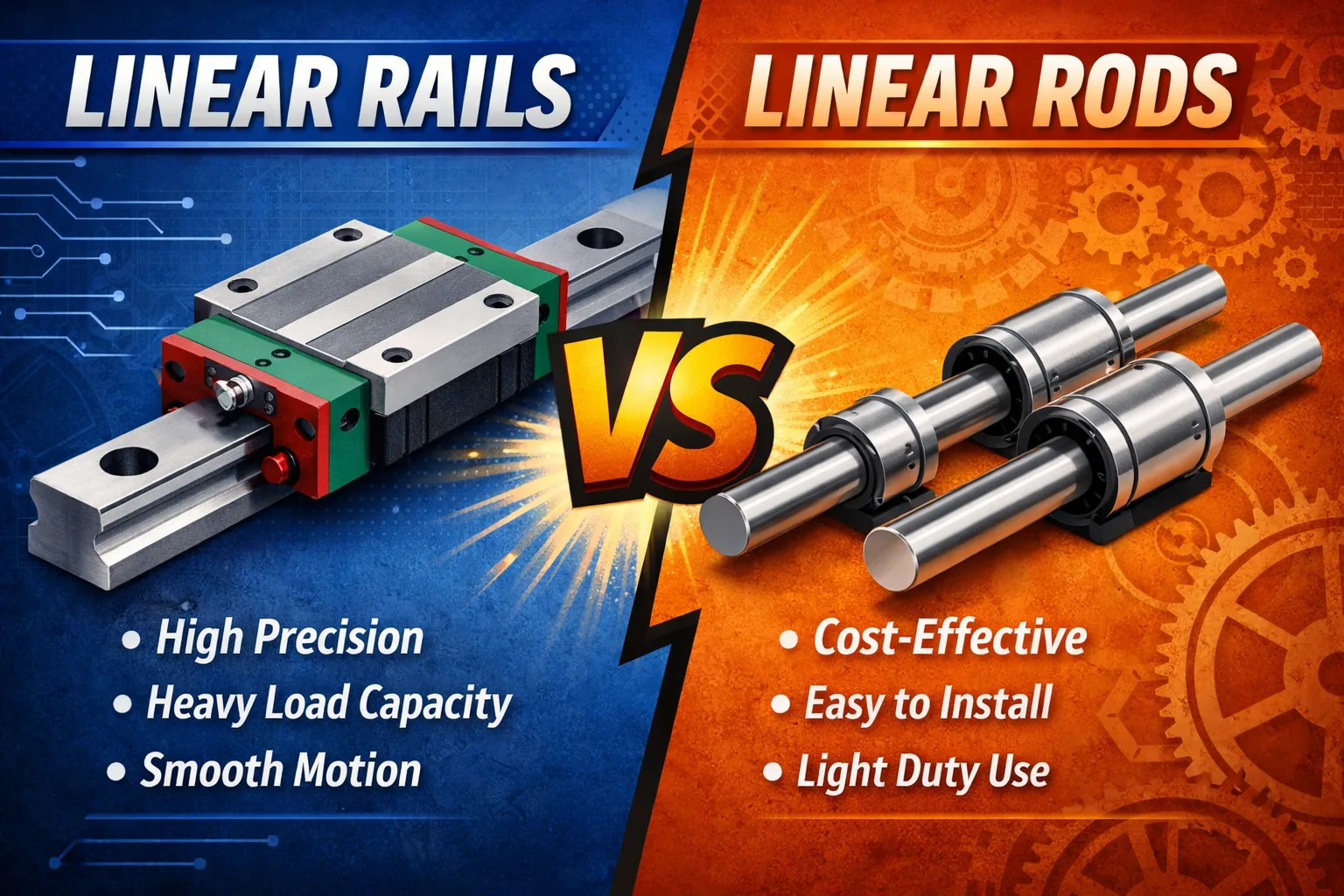
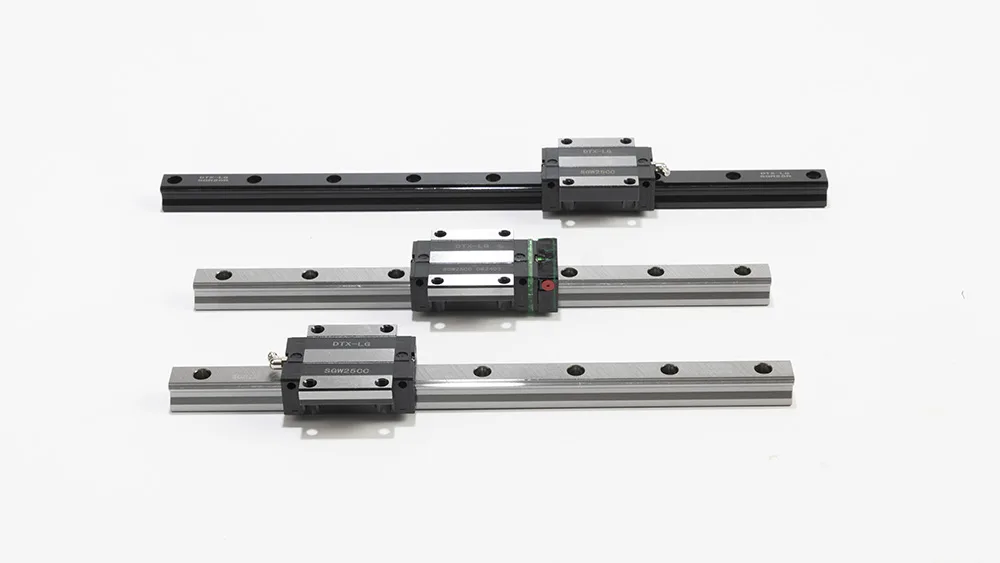
Linear rails (often referred to as linear guides and rails, linear motion guide rails, or linear rail guides) adopt an integrated, multi-contact design, typically consisting of a rail (with precision-ground raceways), a carriage, and rolling elements (balls or rollers) enclosed within the carriage—forming complete linear rail systems. These systems often include linear rail bearings or linear guide rail bearings to enhance motion smoothness and durability. The raceways are engineered to provide uniform load distribution across multiple contact points, and most models include built-in seals, lubrication ports, and dust protection. This design prioritizes precision, rigidity, and stability—critical for high-performance motion systems, including precision linear guide applications and heavy duty linear guide rails.
From a systems perspective, linear rails are “drop-in ready” for most precision applications, including CNC linear guide rails and linear rails for CNC machines. They eliminate the need for additional alignment components (e.g., supports, bushings) and provide consistent performance across the entire travel length. High-end linear rails (e.g., THK, HIWIN, SKF) offer repeat positioning accuracy down to ±0.001mm, and their modular design allows for easy scaling (e.g., dual-rail configurations for heavy loads or high torque, supported linear rail setups for extended travel). There are various linear rail types to suit different needs, from linear ball guide models for low-friction applications to stainless steel linear guide rails (or stainless steel linear guide options) for corrosive environments, and even cost-effective cheap linear guide alternatives for budget-constrained, non-critical applications. Linear rail sizes vary to accommodate different load and space requirements, ensuring versatility across industries.
what is Linear Rods (Linear Shafts)?
Linear rods (also called linear guide shafts, linear slide shafts, or simply linear rod) are simple, cylindrical shafts (precision-ground or polished) paired with linear rod bearing components—most commonly linear bearings and rods, rail linear bearing setups, or bearing guide rails that act as supports. Unlike linear rails, linear rods are a “component-level” solution—they require external supports (e.g., end blocks, brackets) to maintain alignment, and their performance depends heavily on the precision of the supporting structure and the quality of the linear rod bearing pairing. This design prioritizes simplicity, cost-effectiveness, and compactness, making linear rods and bearings a popular choice for small, space-constrained applications.
Linear rods operate on a single-axis, point-contact principle (between the linear rod bearing and the rod’s surface). While a high-quality linear rod paired with a precision linear bearing can achieve moderate precision (±0.01mm repeatability), their rigidity and load-bearing capacity are limited by the linear rod’s diameter and the linear rod bearing type. Plain linear rod bearing options are cost-effective but prone to wear in high-speed applications, while ball-based linear bearing rail systems offer lower friction but require more frequent lubrication and protection from contaminants. Linear rods and bearings are often used in simple linear motion systems, such as manual assembly stations or low-speed conveyors, where precision and load capacity requirements are moderate. Linear tracks for linear rods are typically simpler than those for linear rails, focusing on stable support rather than integrated motion control.
What Matters for Engineering Leaders?
As engineering directors, we must balance four key factors: precision, load capacity, cost, and maintenance—whether evaluating linear rails and bearings, linear rods and bearings, or complete linear bearing rail systems. The table below summarizes the critical performance trade-offs, but I will dive deeper into the nuances that often determine project success or failure, particularly for high-stakes applications like CNC linear guide rails.
Performance Metric | Linear Rails (e.g., CNC linear guide rails, precision linear guide) | Linear Rods (with linear rod bearing, linear bearings and rods) |
Precision (Repeatability/Accuracy) | High (±0.001–±0.01mm); consistent across travel (ideal for precision linear guide, CNC linear slide applications) | Moderate (±0.01–±0.1mm); dependent on support alignment and linear rod bearing quality |
Rigidity & Load Capacity | High; multi-contact design handles radial/axial loads and torque (excellent for heavy duty linear guide rails, supported linear rail) | Low to Moderate; limited by linear rod diameter and linear rod bearing type |
Friction & Speed | Low friction; suitable for high-speed, continuous motion (e.g., linear ball guide, CNC linear slide) | Higher friction (plain linear rod bearing); ball-based linear bearing rail offers low friction but lower durability |
Upfront Cost | Higher (2–5x more than linear rods of similar size); varies by linear rail types, materials (stainless steel linear guide rails cost more than standard), and linear rail sizes | Lower; simple design and fewer components (linear rods and bearings are more affordable than linear rail systems) |
Maintenance & TCO | Low maintenance; built-in protection reduces wear; longer lifespan (5–10 years) (applies to most linear rail systems, including stainless steel linear guide rails) | Higher maintenance; linear rod bearing wears faster; support alignment may require rework; shorter lifespan (2–5 years) (common for linear rods and bearings setups) |
Installation & Integration | Simpler; modular design requires minimal alignment (ideal for CNC linear guide rails, linear rail slides) | More complex; requires precision alignment of supports and linear rod bearing components |
Precision and Rigidity: Non-Negotiable for High-Performance Systems
In precision applications—such as CNC machining centers,Vertical Axis linear guides rail, milling machine linear motion, robotic arms, semiconductor equipment, or metrology tools—linear rails are non-negotiable. This is particularly true for precision linear guide applications, where even minor deviations can ruin workpieces or compromise system reliability. The multi-contact raceway design of linear rails (including linear ball guide models) ensures that even under dynamic loads (e.g., high-speed acceleration, cutting forces), the carriage maintains consistent positioning. I have seen projects where teams opted for linear rods and bearings to save upfront costs, only to face costly rework when the system failed to meet precision requirements (e.g., ±0.005mm repeatability for a CNC router with CNC linear guide rails). The rework cost (replacing linear rods and bearings with linear rail systems, re-aligning supports, re-calibrating the CNC linear slide) often exceeded the initial cost savings by 3–4x. Stainless steel linear guide rails are particularly valuable in precision applications where corrosion resistance is needed, as they maintain accuracy even in harsh environments.
Linear rods, even when paired with high-quality linear rod bearing components, are unsuitable for high-precision applications. Their performance is heavily dependent on the supporting structure—even a minor misalignment in the end blocks can introduce runout, leading to inconsistent motion. In low-precision applications (e.g., conveyor systems using linear bearing track setups, material handling carts with linear rods and bearings), this is acceptable, but in high-performance systems like CNC linear guide rails or precision linear guide applications, it is a critical flaw. Additionally, linear rod bearing components wear over time, further reducing precision, whereas linear rail bearings in integrated systems are better protected and last longer.
Cost vs. TCO: The Engineering Director’s Priority
Engineering teams often fixate on upfront cost, but as directors, we must focus on TCO—whether evaluating linear rail systems, linear rods and bearings, or specialized options like stainless steel linear guide rails or cheap linear guide alternatives. Linear rods and bearings have a lower upfront cost, but their higher maintenance requirements (frequent linear rod bearing replacement), shorter lifespan, and potential for rework make them more expensive in the long run for most industrial applications. By contrast, linear rail systems—even cost-effective cheap linear guide models—offer lower TCO due to reduced maintenance and longer lifespans.
For example, in a 24/7 packaging line using CNC linear slide components, linear rods with plain linear rod bearing may cost $200 per axis upfront, but they require linear rod bearing replacement every 6–12 months (at $50–$100 per linear rod bearing) and quarterly alignment checks (labor cost of $150–$200 per check). Over 5 years, the TCO per axis is approximately $1,500–$2,000. A linear rail system (e.g., a basic linear ball guide or a cheap linear guide option) for the same application may cost $600 upfront, but it requires only annual lubrication (labor cost of $50) and has a 10-year lifespan. Over 5 years, the TCO is approximately $750—less than half of the linear rod and bearing setup’s TCO. For corrosive environments, stainless steel linear guide rails may cost slightly more upfront but eliminate corrosion-related replacement costs, further improving TCO.
The only exception is low-volume, low-duty-cycle applications (e.g., prototype machines using simple linear rods and bearings, manual workstations with basic linear bearing track setups) where upfront cost is the primary constraint, and maintenance frequency is manageable. In these cases, a single linear rod paired with a basic linear rod bearing is often the most cost-effective choice, as the lower upfront cost outweighs the higher long-term maintenance expenses.
Installation and Scalability: Efficiency for Engineering Teams
Linear rails—including linear rail slides, supported linear rail setups, and CNC linear guide rails—simplify installation and scalability—critical for large-scale production lines or projects with tight timelines. Their modular design allows for easy integration into existing systems, and dual-rail configurations can be deployed to handle heavier loads or higher torque without major redesigns. This reduces installation time by 30–40% compared to linear rods and bearings, which require precision alignment of supports and linear rod bearing components. Linear rail systems also offer more flexibility in linear rail sizes and linear rail types, allowing teams to scale or modify systems as project needs change.
Linear rods are more flexible in terms of size (e.g., small-diameter linear slide shafts for compact spaces), but their scalability is limited. Increasing load capacity requires larger-diameter linear rods, additional supports, and re-alignment of linear rod bearing components—adding complexity and cost. In my experience, linear rods and bearings are best suited for small, single-axis applications where space is at a premium and scalability is not a concern, such as small linear bearing track setups or compact linear slides using linear slide shafts. Linear rail systems, by contrast, are better for applications that may require future upgrades, such as adding more linear rail bearings, expanding to supported linear rail configurations, or switching to stainless steel linear guide rails for corrosion resistance.
When to Choose Linear Rails vs. Linear Rods
Based on decades of project experience, I have established clear application boundaries to guide my teams’ decisions—whether selecting linear rail systems, linear rods and bearings, CNC linear guide rails, or specialized options like heavy duty linear guide rails or stainless steel linear guide rails. These boundaries are rooted in the performance trade-offs above and aligned with project goals (precision, cost, scalability, maintenance).
Choose Linear Rails If
Your application requires high precision (repeatability ≤ ±0.01mm) or consistent positioning across long travel lengths (≥1m)—ideal for precision linear guide, linear ball guide, or CNC linear guide rails applications.
The system operates under dynamic loads (e.g., high-speed acceleration, cutting forces, torque) or heavy loads (≥50kg per axis)—suited for heavy duty linear guide rails, supported linear rail, or robust linear rail systems.
You need low maintenance and long lifespan (≥5 years) for 24/7 or high-duty-cycle operations (applies to most linear rail types, including stainless steel linear guide rails and linear rail slides).
Scalability is a priority (e.g., future upgrades to dual-rail configurations, additional linear rail bearings, or switching to larger linear rail sizes).
Examples: CNC machining centers (with CNC linear guide rails, linear rails for CNC, or CNC linear slide components), robotic arms, semiconductor wafer handlers, metrology equipment, high-speed packaging lines, corrosive-environment applications (using stainless steel linear guide rails), and heavy-duty material handling systems (using heavy duty linear guide rails).
Choose Linear Rods If
Your application has low precision requirements (repeatability ≥ ±0.01mm) and operates at low speeds or low duty cycles—suitable for linear rods and bearings or basic linear bearing track setups.
Space is at a premium (e.g., compact equipment, small-diameter linear slide shafts ≤10mm) where linear rail sizes are too large.
Upfront cost is the primary constraint, and maintenance frequency is manageable (e.g., quarterly linear rod bearing checks or replacements)—linear rods and bearings are more affordable than linear rail systems.
The system handles light loads (≤50kg per axis) and no significant torque or dynamic forces—basic linear rod bearing pairings are sufficient.
Examples: Material handling carts (using linear rods and bearings), manual assembly stations, low-speed conveyor guides (with linear bearing track components), prototype machines (using simple linear rod setups), simple linear actuators (with linear slide shafts), and compact devices where linear rail sizes are impractical.
Selection Best Practices
To ensure your team makes the right choice—whether selecting linear rail systems, linear rods and bearings, CNC linear guide rails, or specialized options like stainless steel linear guide rails or cheap linear guide models—I recommend the following best practices—honed through years of managing engineering projects and avoiding costly mistakes:
Start with System Requirements, Not Component Costs首先明确精度、负载、速度及寿命要求——这是在线性导轨类型(如精密线性导轨与廉价线性导轨)或直线轴与轴承之间做出选择的关键。只有在这些要求明确后,才应评估成本。因过度关注前期成本而导致的选型错误(例如,在精密数控应用中选用直线轴与轴承而非CNC线性导轨)是我所见最常见的问题。.
在实际工况中测试对于关键应用(如CNC线性导轨、重型线性导轨),应在实际运行环境(例如存在粉尘、振动或温度波动的场景)中对线性导轨系统以及直线轴与轴承进行测试。实验室测试并不总能反映实际性能,特别是在直线轴轴承磨损或不锈钢线性导轨耐腐蚀性方面。.
与可信赖的供应商合作来自THK、HIWIN、SKF等知名品牌的高质量线性导轨,以及博世力士乐和米思米等品牌的直线轴与轴承,均以质量稳定、使用寿命长而著称。.
同时,工程团队也不应忽视那些拥有多年生产经验的新兴线性导轨制造商,例如DTX-LG。这些新一代品牌通常提供可互换的设计、稳定的质量控制以及更具竞争力的性价比,使其成为CNC线性导轨和其他高负载循环应用的一个实用替代选择。.
无论品牌成熟度如何,在苛刻环境中都应避免使用低成本、通用的线性导轨轴承或直线轴轴承组件,因为公差和材料质量的不一致会显著缩短使用寿命并增加总体拥有成本。.
考虑与其他组件的集成确保所选组件能与您的电机、执行器和控制系统无缝集成。线性导轨系统(包括线性滑轨、线性滚珠导轨型号)通常与精密伺服电机在CNC线性滑台应用中搭配更佳,而直线轴与轴承则兼容更简单的步进电机。此外,还需考虑线性导轨尺寸和直线轴直径,以确保与现有安装座的兼容性。.
规划维护将维护因素纳入总体拥有成本计算。线性导轨系统(即使是廉价的线性导轨选项)通过避免频繁更换直线轴轴承而降低了维护人工成本,这一点在前期成本比较中常被忽视。对于腐蚀性环境,不锈钢线性导轨通过抗锈和抗磨损特性减少了维护需求。.
线性导轨和直线轴都是直线运动系统中的重要解决方案,但其适用性取决于应用需求和长期项目目标。无论优先考虑的是高精度性能、成本效益还是重载能力,工程团队都必须超越前期成本进行评估——而应聚焦于系统的总体拥有成本、可靠性以及在整个生命周期内的可扩展性。.
线性导轨——包括CNC线性导轨、重型线性导轨和不锈钢线性导轨——是精度要求高、高负载、高负载循环应用的优选,这些应用对精度、耐用性和低维护性有严格要求。相比之下,直线轴与轴承则非常适合空间紧凑、负载较低、成本敏感且可接受中等精度的应用。.
通过清晰理解线性导轨与直线轴承之间的功能差异,评估导轨尺寸和轴径,并应用结构化的选型最佳实践,工程团队可以避免代价高昂的设计折衷,并交付能够长期可靠、高效且经济地运行的系统。.