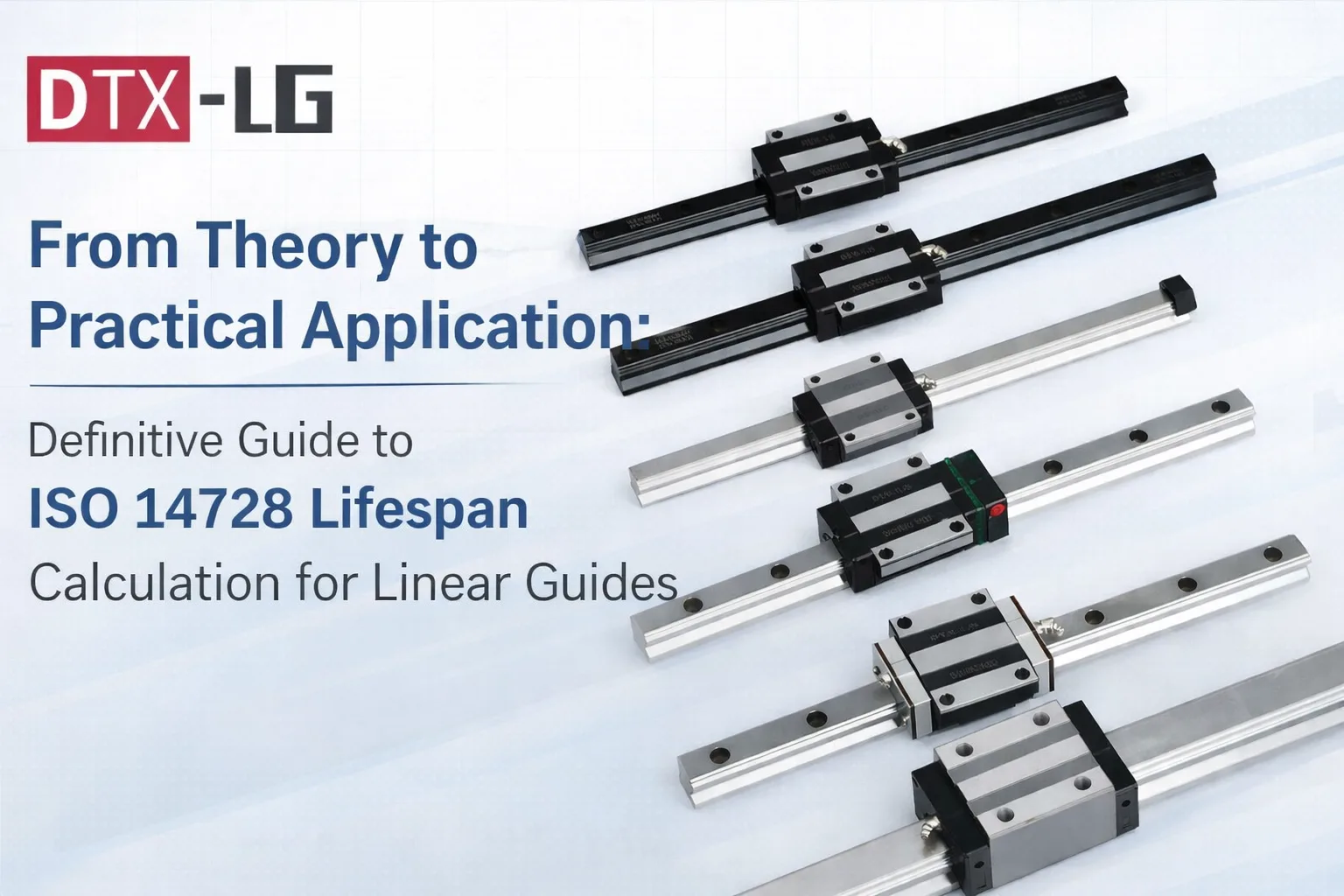
Обеспечение надежности и долгосрочной производительности для компаний, занимающихся линейными перемещениями.
Предпосылки линейных компонентов движения
Линейные направляющие являются основой современного прецизионного оборудования, от станков с ЧПУ и робототехники до автоматизированных производственных линий. Для любой компании, занимающейся линейными перемещениями, или поставщика промышленной автоматизации, обеспечение надежности линейных направляющих имеет решающее значение, поскольку срок службы линейной направляющей напрямую влияет на производительность оборудования, затраты на техническое обслуживание и безопасность эксплуатации.
Прогнозирование срока службы линейных направляющих — нетривиальная задача. Ошибки в расчетах могут привести к преждевременному износу, незапланированным простоям и дорогостоящей замене. Именно поэтому стандарт ISO 14728 широко применяется ведущими производителями линейных направляющих. Следуя ISO 14728, компании-производители линейных рельсов могут предлагать надежную, долговечную продукцию, а инженеры — принимать обоснованные решения при выборе направляющих, определении грузоподъемности и графиков технического обслуживания.
Что такое стандарт ISO 14728?
Ключевые компоненты для производителей линейных направляющих и компаний, выпускающих линейные рельсы:
Динамическая грузоподъемность (C): Нагрузка, при которой 90% направляющих достигнут ожидаемого срока службы.
Фактически приложенная нагрузка (P): Нагрузка, испытываемая в реальных условиях эксплуатации.
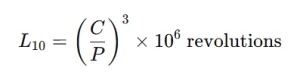
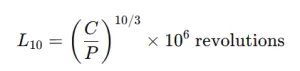
Формула ресурса L10: Зависит от типа направляющей, катящегося элемента и условий нагружения.
Пример формулы (линейная направляющая шарикового типа):
Для линейных направляющих роликового типа:
ISO 14728 позволяет компаниям, работающим в области линейных перемещений, точно прогнозировать срок службы, обеспечивая стабильную работу их систем линейных направляющих.
Теоретические основы расчета срока службы
Понимание теории, лежащей в основе расчета срока службы линейных направляющих, критически важно для любого производителя линейных направляющих, системного интегратора, завода автоматизированного оборудования….
Динамические и статические нагрузки: Направляющие испытывают усилия в нескольких направлениях; различение постоянных и движущихся нагрузок является важным.
Конфигурация катящихся элементов: Количество и расположение шариков или роликов влияют на распределение нагрузки, трение и срок службы.
Точки контакта: Множество катящихся элементов обеспечивают две или более точек контакта, снижая напряжение на каждую точку.
Трение и смазка: Правильная смазка снижает трение, продлевая срок службы системы линейного перемещения.
Применяя эти принципы, компании, работающие в области линейных перемещений, могут выбирать подходящие типы направляющих, рассчитывать ожидаемый ресурс L10 и обеспечивать надежность системы.
От теории к практике: Процесс расчета срока службы
Применение ISO 14728 в реальных системах линейного перемещения требует структурированного подхода. В качестве иллюстрации рассмотрим практический пример с использованием модели линейной направляющей DTX-LG. SGH65HA.
Шаг 1: Сбор эксплуатационных данных
| Параметр | Значение | Единица измерения |
|---|
| Максимальная скорость (V) | 0.5 | м/с |
| Ускорение (a) | 0.083 | м/с² |
| Коэффициент нагрузки (fw) | 1.4 | – |
| Ход (S) | 28000 | мм |
| Частота циклов (n) | 0.48 | 1/мин |
| Количество кареток | 2 | – |
| Количество шариков на каретку | 5 | – |
Эти данные отражают реальные условия эксплуатации продукции производителя линейных направляющих при типичных нагрузках станков с ЧПУ или автоматизации.
Шаг 2: Определение условий нагружения
| Тип нагрузки | Эквивалентная нагрузка (Н) |
|---|
| Ускорение | 45,336.25 |
| Постоянная скорость | 45,107.65 |
| Замедление | 45,447.12 |
| Максимальная нагрузка на каретку | 45,210.75 |
К другим геометрическим параметрам относятся расстояния между центрами кареток (Mc, G1, G2, G3) и расстояния между направляющими рельсами (d1, e). Эти значения позволяют компаниям-производителям линейных рельсов и компаниям, работающим в области линейных перемещений, рассчитывать точный ресурс L10 с учетом реальных сил, действующих на каждую направляющую.
Шаг 3: Расчет ресурса L10
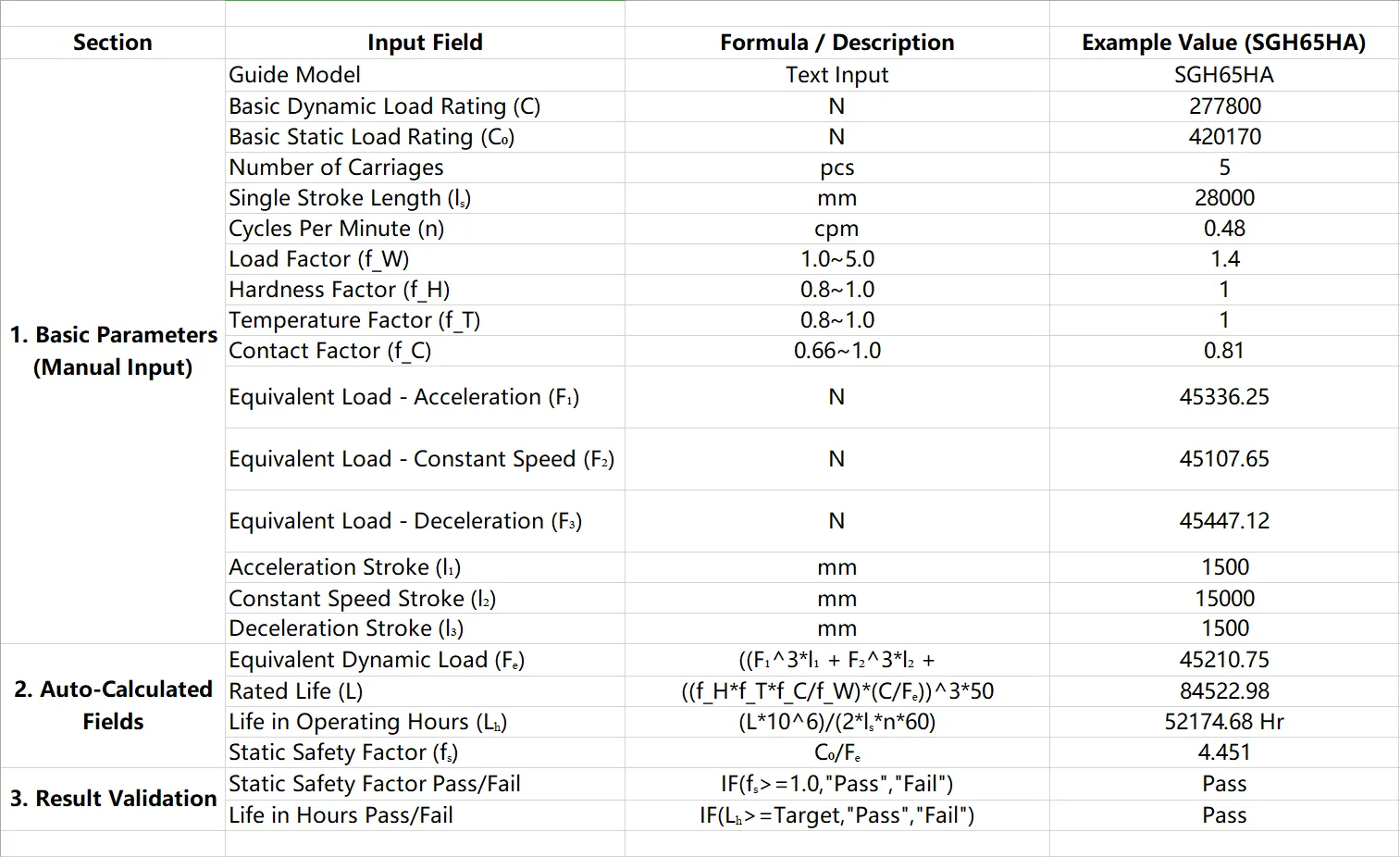
Используя формулы ISO 14728, срок службы можно рассчитать в часах и пройденном расстоянии. Для данной направляющей SGH65HA:
- Коэффициент статической безопасности: 4.451
- Расчетный ресурс L10: 52 174,68 часов (~5,96 лет непрерывной работы)
- Эквивалентное пройденное расстояние: 84 522,98 км
Это демонстрирует, как производитель линейных направляющих может количественно оценить надежность и предоставить клиентам точные ожидания относительно производительности системы линейного перемещения.
Шаг 4: Рекомендации для оптимизации конструкции
- Использование нескольких кареток и высококачественных материалов обеспечивает меньшую нагрузку на каждый катящийся элемент, увеличивая срок службы.
- Правильная установка (соосность) и смазка уменьшают износ даже при длительных перемещениях и повторяющихся циклах ускорения/замедления.
- Проектирование, основанное на данных, позволяет компаниям, работающим в области линейных перемещений, подтверждать заявленные характеристики продукции в соответствии со стандартами ISO 14728.
5. Ключевые факторы, влияющие на срок службы линейных направляющих
| Фактор | Влияние на срок службы | Советы по оптимизации |
|---|
| Материал и термообработка | Твердость и устойчивость к усталости | Использование высококачественной подшипниковой стали с надлежащей закалкой |
| Конструкция ползуна | Роликовые направляющие выдерживают более высокие нагрузки | Выбор конструкции DB/DF в зависимости от области применения |
| Смазка | Недостаточная смазка ускоряет износ | Рекомендуется автоматическая или периодическая смазка |
| Точность монтажа | Несоосность сокращает срок службы | Обеспечение параллельности и правильного предварительного натяга |
| Окружающая среда | Пыль, коррозия или высокая влажность | Защитные покрытия или кожухи |
Учет этих факторов позволяет компаниям, работающим в области линейного перемещения, оптимизировать выбор направляющих и продлить срок их службы.
Преимущества линейных направляющих DTX-LG
Линейные направляющие DTX-LG разработаны с учетом стандарта ISO 14728:
- Высокая грузоподъемность, проверенная на срок службы L10
- Шлифованные рельсы с высокой точностью и малым зазором для стабильного линейного перемещения
- Коррозионностойкие покрытия для долговременной надежности
Эти особенности делают DTX-LG идеальным выбором для производителей роботов, производителей конечного оборудования, производителей модулей линейного перемещения, которые ищут надежные высокопроизводительные линейные направляющие, совместимые с Hiwin, Bosch Rexroth и другими ведущими брендами.
Заключение
Точный расчет срока службы имеет критическое значение для компаний, работающих в области линейного перемещения, производителей линейных рельсов и линейных направляющих. ISO 14728 предоставляет надежную методику для прогнозирования надежности линейных направляющих в реальных условиях эксплуатации.
Следуя теории, применяя практические шаги расчета и учитывая эксплуатационные факторы, инженеры могут обеспечить долговечные и высокопроизводительные линейные направляющие. Выбор качественных продуктов, таких как DTX-LG, гарантирует точность системы, снижает затраты на обслуживание и демонстрирует экспертизу профессиональной компании в области линейного перемещения.