Garantire l'Affidabilità e le Prestazioni a Lungo Termine per le Aziende di Movimento Lineare
Contesto dei componenti per il movimento lineare
Le guide lineari costituiscono l'ossatura delle moderne macchine di precisione, dalle macchine CNC e la robotica alle linee di produzione automatizzate. Per qualsiasi azienda di movimento lineare o fornitore di automazione industriale, garantire l'affidabilità delle guide lineari è cruciale, poiché la durata di una guida lineare influisce direttamente sulle prestazioni dell'attrezzatura, sui costi di manutenzione e sulla sicurezza operativa.
Prevedere la durata delle guide lineari non è banale. Calcoli errati possono comportare usura precoce, fermi macchina imprevisti e sostituzioni costose. Questo è il motivo per cui la norma ISO 14728 è ampiamente adottata dai principali produttori di guide lineari. Seguendo la ISO 14728, le aziende di guide lineari possono fornire prodotti affidabili e di lunga durata, mentre gli ingegneri possono prendere decisioni informate sulla selezione della guida, la capacità di carico e i programmi di manutenzione.
Cos'è la norma ISO 14728?
Componenti chiave per i produttori di guide lineari e le aziende di guide:
Capacità di carico dinamico (C): Il carico sotto il quale il 90% di un gruppo di guide raggiungerà la durata prevista.
Carico effettivo applicato (P): Il carico sperimentato durante il funzionamento reale.
Formula della vita L10: Varia in base al tipo di guida, all'elemento volvente e alle condizioni di carico.
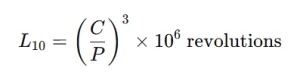
Formula di esempio (guida lineare a sfere):
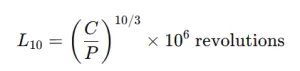
Per guide lineari a rulli:
La ISO 14728 consente alle aziende di movimento lineare di prevedere la durata in modo accurato, garantendo che i loro sistemi di guide lineari offrano prestazioni costanti.
Base Teorica per il Calcolo della Durata
Comprendere la teoria alla base della durata delle guide lineari è fondamentale per qualsiasi produttore di guide lineari, integratore di sistemi, fabbrica di attrezzature automatizzate...
Carichi dinamici vs statici: Le guide subiscono forze in più direzioni; differenziare i carichi costanti e quelli in movimento è essenziale.
Configurazione degli elementi volventi: Il numero e la disposizione delle sfere o dei rulli influenzano la distribuzione del carico, l'attrito e la durata.
Punti di contatto: Molteplici elementi volventi garantiscono due o più punti di contatto, riducendo lo stress per contatto.
Attrito e lubrificazione: Una corretta lubrificazione riduce l'attrito, prolungando la durata del sistema di movimento lineare.
Applicando questi principi, le aziende di movimento lineare possono selezionare tipi di guida adeguati, calcolare la vita L10 attesa e garantire l'affidabilità del sistema.
Dalla Teoria alla Pratica: Flusso di Lavoro per il Calcolo della Durata
Applicare la ISO 14728 nei sistemi di movimento lineare reali richiede un flusso di lavoro strutturato. A titolo esemplificativo, consideriamo un caso pratico utilizzando un modello di guida lineare DTX-LG SGH65HA.
Passo 1: Raccogliere i Dati Operativi
| Parametro | Valore | Unità |
|---|
| Velocità massima (V) | 0.5 | m/sec |
| Accelerazione (a) | 0.083 | m/sec² |
| Coefficiente di carico (fw) | 1.4 | – |
| Corsa (S) | 28000 | mm |
| Frequenza del ciclo (n) | 0.48 | 1/min |
| Numero di carrelli | 2 | – |
| Numero di sfere per carrello | 5 | – |
Questi dati riflettono le condizioni operative reali del prodotto di un produttore di guide lineari sotto tipici carichi di lavoro CNC o di automazione.
Passo 2: Identificare le Condizioni di Carico
| Tipo di Carico | Carico Equivalente (N) |
|---|
| Accelerazione | 45,336.25 |
| Velocità costante | 45,107.65 |
| Decelerazione | 45,447.12 |
| Carico massimo sul carrello | 45,210.75 |
Altri parametri geometrici includono le distanze tra i centri dei carrelli (Mc, G1, G2, G3) e le distanze delle guide (d1, e). Questi valori consentono alle aziende di guide lineari e alle aziende di movimento lineare di calcolare durate L10 precise, tenendo conto delle forze reali che agiscono su ciascuna guida.
Passo 3: Calcolare la Vita L10
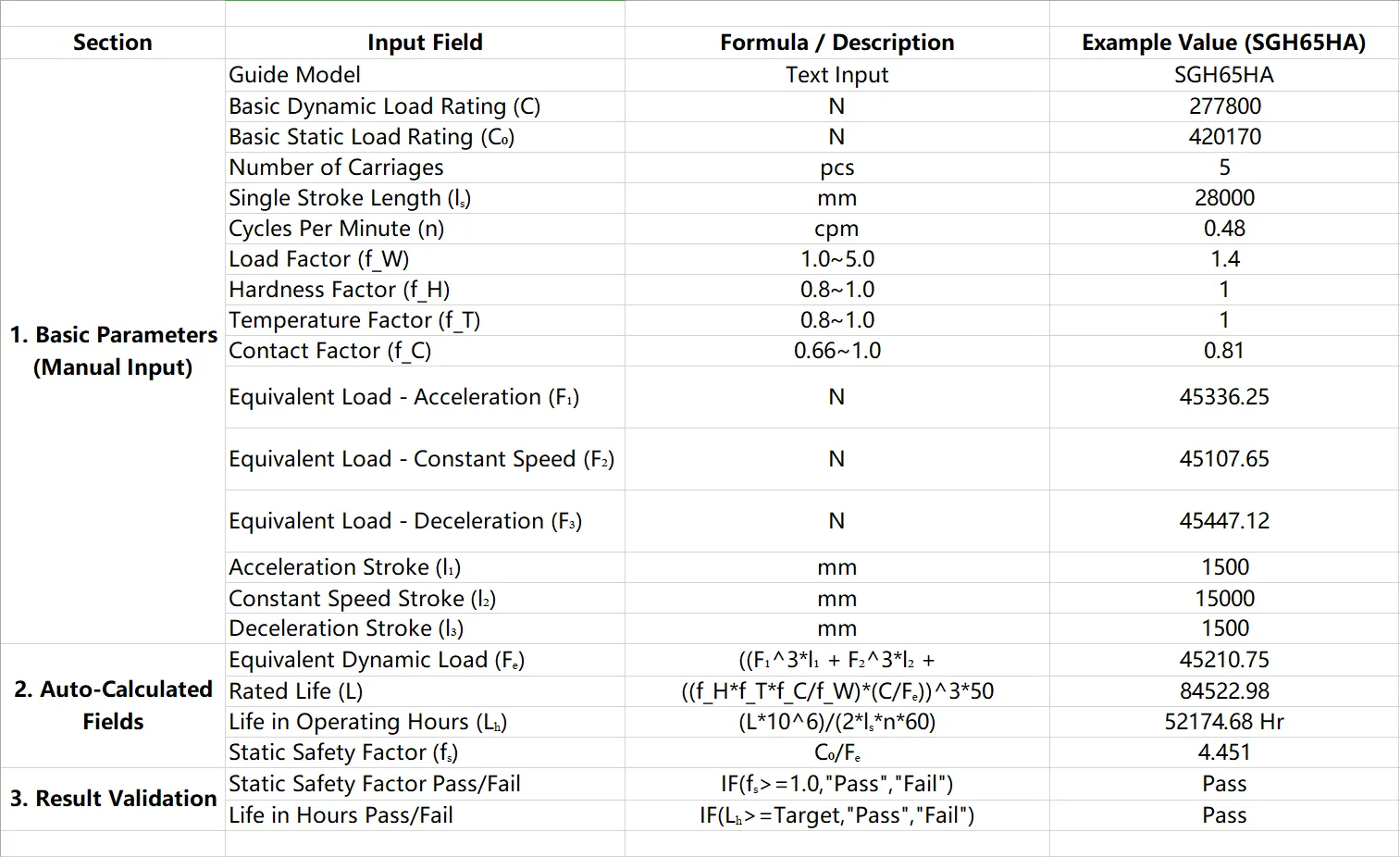
Utilizzando le formule della ISO 14728, la durata può essere calcolata in ore e distanza percorsa. Per questa guida SGH65HA:
- Fattore di sicurezza statico: 4.451
- Vita L10 calcolata: 52.174,68 ore (~5,96 anni di funzionamento continuo)
- Distanza percorsa equivalente: 84.522,98 km
Questo dimostra come un produttore di guide lineari possa quantificare l'affidabilità e fornire ai clienti aspettative precise sulle prestazioni del movimento lineare.
Passo 4: Spunti per l'Ottimizzazione del Progetto
- L'uso di più carrelli e materiali di alta qualità garantisce uno stress inferiore per elemento volvente, aumentando la durata.
- Un corretto allineamento e una corretta lubrificazione riducono l'usura, anche sotto viaggi a lunga distanza e ripetuti cicli di accelerazione/decelerazione.
- Una progettazione basata sui dati consente alle aziende di movimento lineare di convalidare le dichiarazioni sui prodotti rispetto agli standard ISO 14728.
5. Fattori Chiave che Influenzano la Durata delle Guide Lineari
| Fattore | Impatto sulla Durata | Suggerimenti per l'Ottimizzazione |
|---|
| Materiale & Trattamento Termico | Durezza e resistenza alla fatica | Utilizzare acciaio per cuscinetti di alta qualità con tempra adeguata |
| Progettazione del cursore | Le guide a rulli sopportano carichi maggiori | Scegliere la struttura DB/DF in base all'applicazione |
| Lubrificazione | Una lubrificazione insufficiente accelera l'usura | Si raccomanda lubrificazione automatica o periodica |
| Precisione di installazione | Il disallineamento riduce la durata di vita | Garantire parallelismo e precarico corretto |
| Ambiente | Polvere, corrosione o elevata umidità | Rivestimenti protettivi o coperture |
Considerare questi fattori consente alle aziende di moto lineare di ottimizzare la selezione delle guide e prolungarne la durata.
Vantaggi delle guide lineari DTX-LG
Le guide lineari DTX-LG sono progettate in conformità alla norma ISO 14728:
- Elevata capacità di carico testata per la durata di vita L10
- Rotaie rettificate di precisione e bassa tolleranza per un movimento lineare stabile
- Rivestimenti resistenti alla corrosione per affidabilità a lungo termine
Queste caratteristiche rendono DTX-LG la scelta ideale per produttori di robot, produttori di macchine utensili e produttori di moduli a moto lineare che cercano guide lineari affidabili e ad alte prestazioni, compatibili con Hiwin, Bosch Rexroth e altri marchi leader.
Conclusione
Il calcolo accurato della durata di vita è fondamentale per aziende di moto lineare, produttori di guide lineari e aziende di rotaie lineari. La norma ISO 14728 fornisce un quadro affidabile per prevedere l'affidabilità delle guide lineari in condizioni operative reali.
Seguendo la teoria, applicando passaggi di calcolo pratici e considerando i fattori operativi, gli ingegneri possono garantire guide lineari durevoli e ad alte prestazioni. Scegliere prodotti di alta qualità come DTX-LG assicura precisione del sistema, riduce la manutenzione e dimostra l'esperienza di un'azienda professionale di moto lineare.