Che cos’è una struttura di guida lineare di tipo DB?
Nella progettazione di fresatrici CNC e automazione di precisione, la selezione della corretta guida lineare per CNC è cruciale per prestazioni, accuratezza e affidabilità. Tra le numerose guide CNC disponibili, la guida lineare di tipo DB (Back-to-Back) si è dimostrata una soluzione eccellente per applicazioni di guide lineari pesanti e scenari ad alta stabilità.
1. Cos'è la struttura DB?
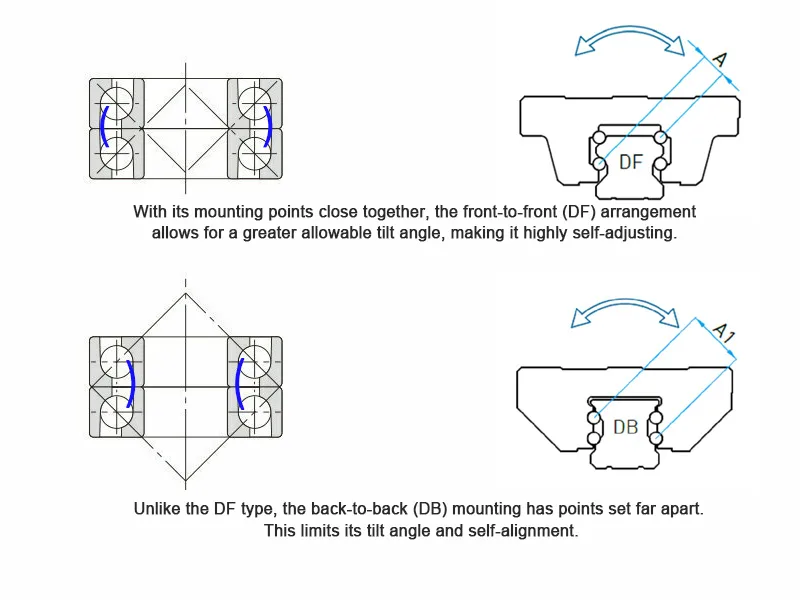
La struttura DB, abbreviazione di disposizione a sfere Back-to-Back, è un progetto di blocco per guide lineari CNC che utilizza sfere anziché rulli. In questo progetto, le file di elementi volventi sono orientate verso l'esterno, a differenza della struttura DF (Face-to-Face), in cui le sfere sono rivolte verso l'interno.
Fisicamente, la struttura DB distribuisce i punti di contatto più distanti tra loro, aumentando efficacemente il braccio della leva per resistere a forze di ribaltamento o capovolgimento.
DF = Face-to-Face → movimento fluido, adatto per guide lineari CNC standard e assi ad alta velocità e carico leggero.
DB = Back-to-Back → alta stabilità e capacità di carico, in grado di sostituire le guide a rulli in alcune applicazioni pesanti di guide lineari, offrendo una soluzione vantaggiosa in termini di costo pur mantenendo i vantaggi delle guide lineari a sfere.
Confronto tra struttura DB e DF
2. Vantaggi principali e applicazioni della struttura DB
Vantaggio della struttura DB
Applicazioni tipiche
Scenari non adatti / Note
Elevata capacità di carico in direzione verticale
Moduli di sollevamento asse Z, centri di lavorazione verticali, sistemi automatizzati di carico e scarico
Non ideale per assi a velocità ultra-elevata e carico leggero; potrebbe risultare in rigidità e costi non necessari
Eccellente resistenza al ribaltamento e ai momenti
Strutture a sbalzo, piattaforme a corsa lunga con supporto unilaterale, sistemi con carico fuori centro
Maggiori requisiti di accuratezza della superficie di montaggio; una scarsa planarità della base può ridurre le prestazioni
Alta stabilità di marcia, soppressione delle vibrazioni
Apparecchiature ad avviamento/arresto ad alta frequenza, sistemi di ispezione di precisione, apparecchiature per semiconduttori
La struttura DF è più adatta quando sono richieste velocità estrema e attrito ultra-basso
Può sostituire le guide a rulli in alcune applicazioni
Linee di automazione a carico medio-alto, apparecchiature pesanti sensibili ai costi
Non adatto per carichi estremamente pesanti o applicazioni che richiedono rigidità ultra-elevata (es. assi mandrino)
3. Fisica alla base della stabilità delle guide DB per CNC
Meccanicamente, la stabilità deriva dalla resistenza alla coppia (momento):
M=F×dM=F×i
F = carico esterno
d = distanza dal punto di applicazione della forza all'asse centrale della guida
Le guide lineari CNC DF hanno punti di contatto più vicini (d minore), quindi il momento resistente è minore. Sono adatte per assi XY ad alta velocità e carico leggero.
Le guide lineari CNC DB hanno punti di contatto distribuiti verso l'esterno (d maggiore), creando un momento più forte contro inclinazione o torsione:
MDB = F × dDB (dDB > dDF)
Ciò rende le guide DB ideali per guide lineari di fresatrici CNC asse Z e strutture a sbalzo.
4. Quando non dovrebbero essere usate le guide lineari di tipo DB?
Sebbene le guide lineari DB (Back-to-Back) offrano alta stabilità, eccellente capacità di carico e la possibilità di sostituire alcune guide a rulli in applicazioni pesanti, ci sono situazioni specifiche in cui non sono adatte:
Applicazioni a velocità ultra-elevata e carico leggero
Le guide DB hanno angoli di contatto maggiori e un attrito leggermente superiore rispetto alle guide DF, il che può limitare la velocità massima.
Per assi XY veloci a basso carico o fresatrici CNC ad alta velocità, una struttura DF (Face-to-Face) è spesso migliore.
Carichi di mandrino o taglio estremamente pesanti
Nei casi in cui è richiesta la massima rigidità, come per mandrini CNC per taglio pesante, le tradizionali guide a rulli possono ancora superare le guide DB.
Superfici di installazione preparate male o imprecise
Le guide DB dipendono da una corretta planarità e parallelismo della base per ottenere una piena distribuzione del carico.
Superfici di montaggio irregolari possono ridurre l'accuratezza, causare usura non uniforme o accorciare la durata di servizio.
Applicazioni in cui il rapporto costo-efficacia non è una preoccupazione
Se il sistema utilizza già guide a rulli e l'alta rigidità è essenziale, sostituirle con guide DB potrebbe non essere necessario.
5. Confronto rapido: guide lineari CNC DF vs DB
Caratteristica
DF (Face-to-Face)
DB (Back-to-Back)
Capacità di carico
Media
Alta (guida lineare per carichi pesanti)
Resistenza all'inclinazione / alla coppia
Media
Alta
Stabilità di corsa
Scorrimento fluido, ad alta velocità
Elevata stabilità, antivibrante
Ideale per
Assi orizzontali XY, ad alta velocità
Guide CNC verticali per asse Z, robuste, a sbalzo
Costo
Inferiore
Moderato (superiore a DF, inferiore alle guide a rulli)
Soluzione di guide lineari DTX-LG
DTX-LG offre un'ampia gamma di guide lineari di alta qualità per applicazioni CNC e ad alto carico:
Prodotti con struttura DF (faccia a faccia):
SG, SE, SM serie – progettata per sostituire le serie Hiwin HG, EG e MG, garantendo scorrimento fluido e prestazioni ad alta velocità per applicazioni standard di guide lineari CNC.
Serie SD – progettata per elevata stabilità e portanza, in grado di sostituire la serie Bosch Rexroth BSCL, ideale per assi verticali, strutture a sbalzo e guide CNC robuste.
Guide lineari compatte DTX-LG
DTX-LG è un produttore professionale di guide lineari di precisione, che offre alta intercambiabilità, soluzioni personalizzate e fornitura affidabile per automazione industriale, macchinari CNC e applicazioni ad alto carico.
Per ulteriori informazioni o supporto tecnico, si prega di contattare il team DTX-LG Siamo pronti ad assistervi nella selezione dei prodotti, personalizzazione e integrazione nei vostri progetti CNC o di automazione.
Ottieni il tuo file STEP della guida lineare
Lascia i tuoi dati di contatto per ricevere il file STEP e ottenere supporto tecnico professionale e consigli sulla selezione del prodotto