
-
01/22/2026
- 0 Commentaire
Rails linéaires contre tiges linéaires
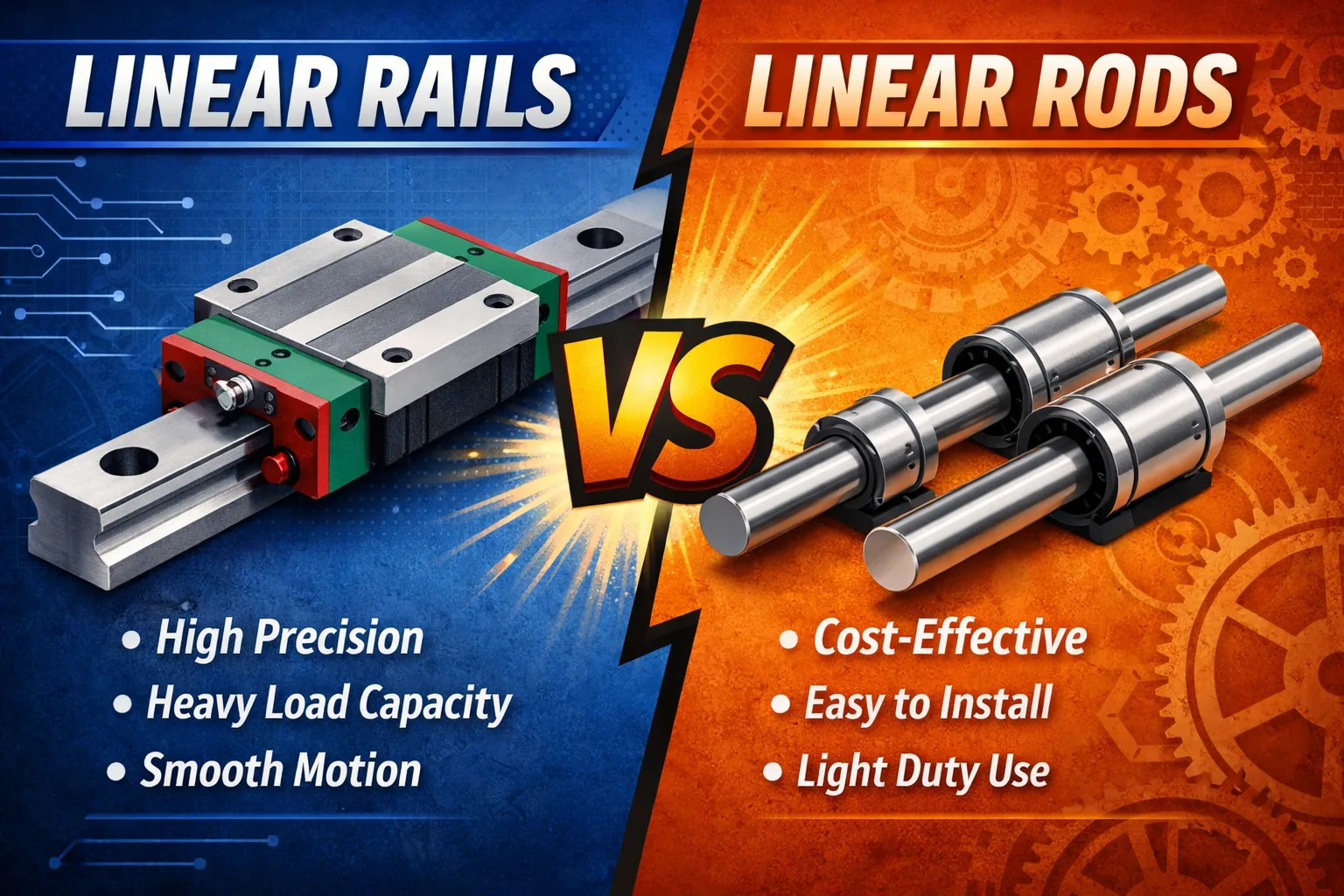
En tant que directeur principal de l'ingénierie avec plus de 15 ans d'expérience dans la conception, la production et l'optimisation d'équipements industriels, j'ai supervisé d'innombrables projets où le choix entre les rails linéaires et les tiges linéaires a directement impacté les performances, la fiabilité et le coût total de possession (TCO) des équipements. Les rails linéaires (également appelés rails de guidage linéaire, rails de mouvement linéaire ou glissières linéaires) et les tiges linéaires (également connues sous le nom d'arbres linéaires, d'arbres de guidage linéaire ou d'arbres de glissement linéaire) sont tous deux des composants essentiels pour les systèmes de mouvement linéaire, mais ils ne sont pas interchangeables — chacun excelle dans des scénarios spécifiques, et une mauvaise sélection peut entraîner des reprises coûteuses, une défaillance prématurée ou des performances insuffisantes. Cela est particulièrement critique lors de l'évaluation des rails linéaires et des roulements, des tiges linéaires et des roulements, ou des systèmes de rails à roulements linéaires, car ces associations de composants définissent la capacité du système de mouvement. Dans cet article, je décomposerai les différences fondamentales entre les rails linéaires et les tiges linéaires, explorerai ce qu'est un guide linéaire et ce qu'est un roulement linéaire, et détaillerai les compromis de performance, les limites d'application et les principes clés de sélection d'un point de vue de leadership en ingénierie — aidant les équipes à prendre des décisions stratégiques et basées sur les données qui s'alignent sur les objectifs du projet, qu'il s'agisse de sélectionner des rails linéaires pour CNC, des rails de guidage linéaire lourds ou des options de guides linéaires abordables.
La différence fondamentale
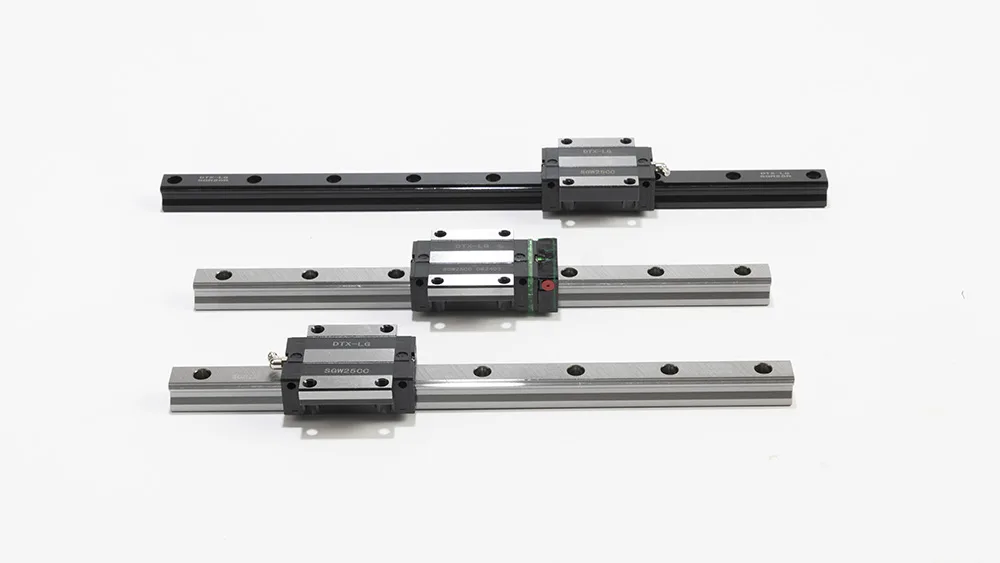
Qu'est-ce que les rails linéaires (guides linéaires) ?
Qu'est-ce que les tiges linéaires (arbres linéaires) ?
Les tiges linéaires (également appelées arbres de guidage linéaire, arbres de glissement linéaire ou simplement tige linéaire) sont des arbres cylindriques simples (rectifiés de précision ou polis) associés à des composants de roulement de tige linéaire — le plus souvent des roulements et tiges linéaires, des configurations de roulements de rail linéaire ou des rails de guidage à roulements qui agissent comme supports. Contrairement aux rails linéaires, les tiges linéaires sont une solution “ au niveau du composant ” — elles nécessitent des supports externes (par exemple, blocs d'extrémité, supports) pour maintenir l'alignement, et leurs performances dépendent fortement de la précision de la structure de support et de la qualité de l'association du roulement de tige linéaire. Cette conception privilégie la simplicité, la rentabilité et la compacité, faisant des tiges et roulements linéaires un choix populaire pour les applications petites et à espace restreint.
Les tiges linéaires fonctionnent sur un principe de contact ponctuel à axe unique (entre le roulement de tige linéaire et la surface de la tige). Bien qu'une tige linéaire de haute qualité associée à un roulement linéaire de précision puisse atteindre une précision modérée (répétabilité de ±0,01 mm), leur rigidité et leur capacité de charge sont limitées par le diamètre de la tige linéaire et le type de roulement de tige linéaire. Les options de roulements de tige linéaire simples sont rentables mais sujettes à l'usure dans les applications à grande vitesse, tandis que les systèmes de rails à roulements à billes linéaires offrent une friction plus faible mais nécessitent une lubrification plus fréquente et une protection contre les contaminants. Les tiges et roulements linéaires sont souvent utilisés dans les systèmes de mouvement linéaire simples, tels que les postes d'assemblage manuels ou les convoyeurs à faible vitesse, où les exigences de précision et de capacité de charge sont modérées. Les pistes linéaires pour tiges linéaires sont généralement plus simples que celles pour rails linéaires, se concentrant sur un support stable plutôt que sur un contrôle de mouvement intégré.
Qu'est-ce qui importe pour les leaders en ingénierie ?
Métrique de performance | Rails linéaires (par exemple, rails de guidage linéaire pour CNC, guide linéaire de précision) | Tiges linéaires (avec roulement de tige linéaire, roulements et tiges linéaires) |
Précision (Répétabilité/Exactitude)) | Élevée (±0,001–±0,01 mm) ; constante sur tout le déplacement (idéal pour le guide linéaire de précision, les applications de glissière linéaire CNC) | Modérée (±0,01–±0,1 mm) ; dépend de l'alignement du support et de la qualité du roulement de tige linéaire |
Rigidité et capacité de charge | Élevée ; la conception à contacts multiples gère les charges radiales/axiales et le couple (excellent pour les rails de guidage linéaire lourds, le rail linéaire supporté) | Faible à modérée ; limitée par le diamètre de la tige linéaire et le type de roulement de tige linéaire |
Friction et vitesse | Faible friction ; adapté aux mouvements continus à grande vitesse (par exemple, guidage à billes linéaires, glissière linéaire CNC) | Friction plus élevée (roulement de tige linéaire simple) ; le rail à roulements à billes linéaires offre une faible friction mais une durabilité moindre |
Coût initial | Plus élevé (2 à 5 fois plus que les tiges linéaires de taille similaire) ; varie selon les types de rails linéaires, les matériaux (les rails de guidage linéaire en acier inoxydable coûtent plus cher que les standards) et les tailles de rails linéaires | Plus faible ; conception simple et moins de composants (les tiges et roulements linéaires sont plus abordables que les systèmes de rails linéaires) |
Maintenance et TCO | Faible maintenance ; protection intégrée réduit l'usure ; durée de vie plus longue (5 à 10 ans) (s'applique à la plupart des systèmes de rails linéaires, y compris les rails de guidage linéaire en acier inoxydable) | Maintenance plus élevée ; le roulement de tige linéaire s'use plus rapidement ; l'alignement du support peut nécessiter des reprises ; durée de vie plus courte (2 à 5 ans) (courant pour les configurations de tiges et roulements linéaires) |
Installation et intégration | Plus simple ; la conception modulaire nécessite un alignement minimal (idéal pour les rails de guidage linéaire CNC, les glissières de rail linéaire) | Plus complexe ; nécessite un alignement de précision des supports et des composants de roulement de tige linéaire |
Précision et rigidité : non négociables pour les systèmes haute performance
Par exemple, dans une ligne d'emballage fonctionnant 24h/24 et 7j/7 utilisant des composants de glissière linéaire CNC, les tiges avec roulement de tige linéaire simple peuvent coûter $200 par axe au départ, mais nécessitent un remplacement du roulement de tige linéaire tous les 6 à 12 mois (à $50–$100 par roulement de tige linéaire) et des contrôles d'alignement trimestriels (coût de main-d'œuvre de $150–$200 par contrôle). Sur 5 ans, le TCO par axe est d'environ $1 500–$2 000. Un système de rails linéaires (par exemple, un guidage à billes linéaires de base ou une option de guide linéaire bon marché) pour la même application peut coûter $600 au départ, mais ne nécessite qu'une lubrification annuelle (coût de main-d'œuvre de $50) et a une durée de vie de 10 ans. Sur 5 ans, le TCO est d'environ $750 — moins de la moitié du TCO de la configuration de tiges et roulements linéaires. Pour les environnements corrosifs, les rails de guidage linéaire en acier inoxydable peuvent coûter légèrement plus cher au départ, mais éliminent les coûts de remplacement liés à la corrosion, améliorant encore le TCO.
Installation and Scalability: Efficiency for Engineering Teams
When to Choose Linear Rails vs. Linear Rods
Choose Linear Rails If
- Your application requires high precision (repeatability ≤ ±0.01mm) or consistent positioning across long travel lengths (≥1m)—ideal for precision linear guide, linear ball guide, or CNC linear guide rails applications.
- The system operates under dynamic loads (e.g., high-speed acceleration, cutting forces, torque) or heavy loads (≥50kg per axis)—suited for heavy duty linear guide rails, supported linear rail, or robust linear rail systems.
- You need low maintenance and long lifespan (≥5 years) for 24/7 or high-duty-cycle operations (applies to most linear rail types, including stainless steel linear guide rails and linear rail slides).
- Scalability is a priority (e.g., future upgrades to dual-rail configurations, additional linear rail bearings, or switching to larger linear rail sizes).
- Examples: CNC machining centers (with CNC linear guide rails, linear rails for CNC, or CNC linear slide components), robotic arms, semiconductor wafer handlers, metrology equipment, high-speed packaging lines, corrosive-environment applications (using stainless steel linear guide rails), and heavy-duty material handling systems (using heavy duty linear guide rails).
Choose Linear Rods If
- Your application has low precision requirements (repeatability ≥ ±0.01mm) and operates at low speeds or low duty cycles—suitable for linear rods and bearings or basic linear bearing track setups.
- Space is at a premium (e.g., compact equipment, small-diameter linear slide shafts ≤10mm) where linear rail sizes are too large.
- Upfront cost is the primary constraint, and maintenance frequency is manageable (e.g., quarterly linear rod bearing checks or replacements)—linear rods and bearings are more affordable than linear rail systems.
- The system handles light loads (≤50kg per axis) and no significant torque or dynamic forces—basic linear rod bearing pairings are sufficient.
- Examples: Material handling carts (using linear rods and bearings), manual assembly stations, low-speed conveyor guides (with linear bearing track components), prototype machines (using simple linear rod setups), simple linear actuators (with linear slide shafts), and compact devices where linear rail sizes are impractical.
Selection Best Practices
- Start with System Requirements, Not Component Costs: Définissez d'abord vos exigences en matière de précision, charge, vitesse et durée de vie — essentiel pour choisir entre les types de rails linéaires (par exemple, guide linéaire de précision vs guide linéaire économique) ou les tiges et paliers linéaires. Ce n'est qu'après avoir clarifié ces points que vous devez évaluer le coût. Une erreur de sélection due à une focalisation sur le coût initial (par exemple, choisir des tiges et paliers linéaires plutôt que des rails guides linéaires pour CNC dans une application CNC de précision) est l'erreur la plus courante que je constate.
- Tester en Conditions Réelles: Pour les applications critiques (par exemple, rails guides linéaires pour CNC, rails guides linéaires pour charges lourdes), testez à la fois les systèmes de rails linéaires et les tiges et paliers linéaires dans votre environnement opérationnel réel (par exemple, avec poussière, vibrations ou fluctuations de température). Les tests en laboratoire ne reflètent pas toujours les performances réelles, notamment en ce qui concerne l'usure des paliers de tiges linéaires ou la résistance à la corrosion des rails guides linéaires en acier inoxydable.
Partenariat avec des Fournisseurs de Confiance: Les rails linéaires de haute qualité de marques établies telles que THK, HIWIN et SKF — ainsi que les tiges et paliers linéaires de Bosch Rexroth et Misumi — sont réputés pour leur qualité constante et leur longue durée de vie.
Parallèlement, les équipes d'ingénierie ne doivent pas négliger les fabricants émergents de guides linéaires possédant de nombreuses années d'expérience en production, tels que DTX-LG. Ces marques de nouvelle génération offrent souvent des conceptions interchangeables, un contrôle qualité stable et des rapports coût-performance plus compétitifs, ce qui en fait une alternative pratique pour les rails guides linéaires CNC et autres applications à cycle de service élevé.
Quelle que soit la maturité de la marque, évitez les paliers de rails linéaires génériques à bas coût ou les composants de tiges et paliers linéaires dans des environnements exigeants, car des tolérances et une qualité des matériaux incohérentes peuvent réduire considérablement la durée de vie et augmenter le coût total de possession.
- Prendre en Compte l'Intégration avec d'Autres Composants: Assurez-vous que le composant sélectionné s'intègre parfaitement à votre moteur, actionneur et système de contrôle. Les systèmes de rails linéaires (y compris les chariots de rails linéaires, les modèles de guides à billes linéaires) s'associent souvent mieux avec des servomoteurs de précision pour les applications de chariots linéaires CNC, tandis que les tiges et paliers linéaires sont compatibles avec des moteurs pas à pas plus simples. Tenez également compte des dimensions des rails linéaires et des diamètres des tiges linéaires pour garantir la compatibilité avec les supports existants.
- Planifier la Maintenance: Intégrez la maintenance dans votre calcul du coût total de possession. Les systèmes de rails linéaires (même les options de guides linéaires économiques) réduisent les coûts de main-d'œuvre de maintenance en éliminant les remplacements fréquents des paliers de tiges linéaires, souvent négligés dans les comparaisons de coûts initiaux. Pour les environnements corrosifs, les rails guides linéaires en acier inoxydable réduisent la maintenance en résistant à la rouille et à l'usure.
Les rails linéaires et les tiges linéaires sont tous deux des solutions essentielles dans les systèmes de mouvement linéaire, mais leur adéquation dépend des exigences de l'application et des objectifs à long terme du projet. Que la priorité soit la performance de haute précision, l'efficacité des coûts ou la capacité de charge lourde, les équipes d'ingénierie doivent évaluer plus que le coût initial — en se concentrant plutôt sur le coût total de possession (CTP), la fiabilité et l'évolutivité tout au long du cycle de vie du système.
Les rails linéaires — y compris les rails guides linéaires pour CNC, les rails guides linéaires pour charges lourdes et les rails guides linéaires en acier inoxydable — sont le choix privilégié pour les applications critiques en précision, à charge élevée et à cycle de service élevé, où la précision, la durabilité et une faible maintenance sont non négociables. En revanche, les tiges et paliers linéaires sont bien adaptés aux applications compactes, à faible charge et sensibles aux coûts, où une précision modérée est acceptable.
En comprenant clairement les différences fonctionnelles entre les guides linéaires et les paliers linéaires, en évaluant les dimensions des rails et les diamètres des arbres, et en appliquant des bonnes pratiques de sélection structurées, les équipes d'ingénierie peuvent éviter des compromis de conception coûteux et fournir des systèmes performants, fiables, efficaces et économiques pendant des années.