
-
01/15/2026
- 0 Commentaire
Sélection des guidages linéaires verticaux vs horizontaux
Table des matières
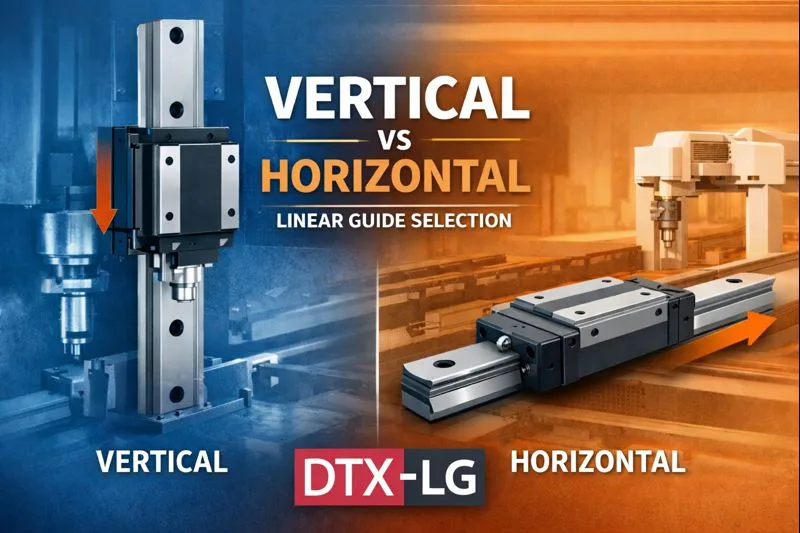
Dans le domaine des systèmes de mouvement linéaire, un choix en apparence simple peut en réalité faire ou défaire votre équipement : choisir le bon guide linéaire pour les mouvements horizontaux (axe Y) et verticaux (axe Z).
Il ne s'agit pas seulement de choisir une direction. Choisir le mauvais guide peut entraîner une instabilité de la précision, une durée de vie réduite, ou pire – des risques pour la sécurité et des pertes financières importantes. Dans cet article, nous détaillerons les principales différences entre les guides linéaires pour axe Y et axe Z et vous fournirons un cadre simple pour vous aider à sélectionner le bon, construisant ainsi un noyau de mouvement solide comme le roc pour vos machines.
Définition des guides linéaires verticaux et horizontaux
Qu'est-ce qu'un guide linéaire horizontal ?
Un guide linéaire horizontal désigne généralement un système de guidage le long des axes X et Y qui entraîne la charge à se déplacer avec précision dans une direction horizontale (avant, arrière, gauche et droite). Il est la pierre angulaire du mouvement horizontal d'une table ou d'un coulisseau. Subit une charge gravitationnelle moindre dans la direction du mouvement. La gravité peut toujours affecter le guide perpendiculairement mais n'augmente pas significativement la charge axiale. Les guides horizontaux sont largement utilisés dans :
- Les tables XY de précision
- Les convoyeurs et les machines de pick-and-place
- Les bras robotisés avec un mouvement principalement horizontal
Les applications horizontales font face à des défis tels que les charges de moment, les effets de porte-à-faux et le maintien de la précision sur de longues courses, mais la charge gravitationnelle dans la direction du mouvement est généralement bien inférieure à celle des guides verticaux.
Qu'est-ce qu'un guide linéaire vertical ?
Les guides linéaires verticaux, communément utilisés dans les applications d'axe Z telles que les fraiseuses CNC, les imprimantes 3D et les mécanismes de levage, doivent supporter le poids des composants mobiles tout en maintenant la précision et la répétabilité. L'orientation verticale introduit une charge axiale due à la gravité, ce qui peut poser plusieurs défis :
- Dérive ou glissement vers le bas sous charges lourdes
- Usure accrue des surfaces de roulement
- Sensibilité à la précharge et à la précision d'installation
- Vibrations ou jeu potentiels si le guide n'est pas suffisamment rigide
Pour ces raisons, les guides verticaux nécessitent une attention particulière à la capacité de charge, à la rigidité structurelle et à la gestion des frottements.
Types de guides linéaires
Choisir le guide linéaire optimal pour un mouvement linéaire dans différentes directions dépend également de la compréhension de la structure mécanique et des avantages en performance des différents types de guides.
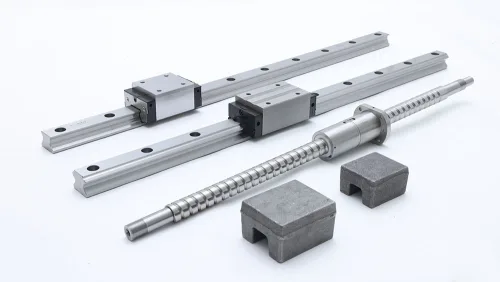
Guides linéaires à billes
Les guides linéaires à billes sont la solution la plus courante, réputés pour leur haute précision, leur faible frottement et leur mouvement fluide. Offrant une capacité à haute vitesse et une excellente répétabilité, ils sont bien adaptés aux applications à charges légères à moyennes et sont fréquemment employés dans les systèmes de guides linéaires à 3 axes des machines CNC pour les mouvements des axes X et Y. Pour améliorer les performances, certains modèles intègrent plusieurs rangées de billes (2 à 4 rangées), ce qui améliore significativement la rigidité du système. Cependant, dans les applications verticales (axe Z) sous charges lourdes – courantes dans les centres d'usinage verticaux – les guides à billes peuvent être sujets au glissement ou à une usure inégale, nécessitant souvent un ajustement de la précharge ou des conceptions à haute rigidité pour garantir la stabilité. D'un point de vue coût, ils sont généralement l'option la plus économique pour de tels systèmes multi-axes en raison de processus de fabrication relativement plus simples et d'exigences en matériaux plus légères.
Guides linéaires à rouleaux
Assemblages de rails guides à rouleaux utilisent des rouleaux cylindriques à la place des billes, ce qui augmente considérablement la surface de contact entre les composants. Par conséquent, ils offrent une capacité de charge substantiellement plus élevée – souvent deux à trois fois celle de guides à billes de taille similaire – et fournissent une excellente rigidité. Cela les rend particulièrement adaptés aux applications impliquant des charges verticales (axe Z) lourdes ou en porte-à-faux, comme pour servir de robuste guide linéaire d'axe Z CNC dans les centres d'usinage. Bien que leur conception entraîne un frottement légèrement plus élevé, les rendant idéaux pour les opérations à vitesse modérée, leur force principale réside dans les environnements exigeant une rigidité et une durabilité extrêmes, ce qui est crucial pour la précision et la stabilité de l'axe Z d'une machine CNC. En termes de coût, les guides à rouleaux sont généralement les plus chers parmi les types de guides linéaires courants en raison de leurs composants plus complexes et d'une plus grande utilisation de matériaux.
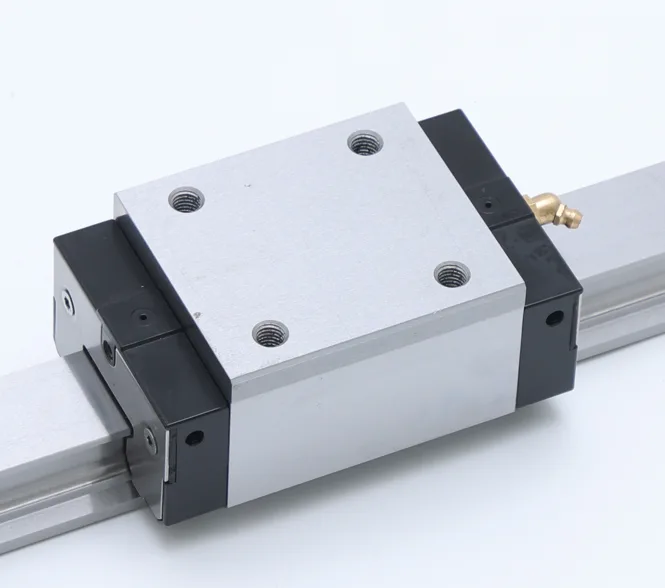
Guides linéaires à structure DB
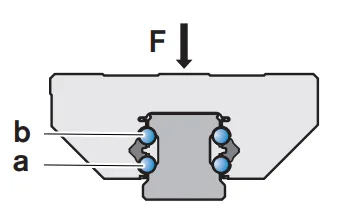
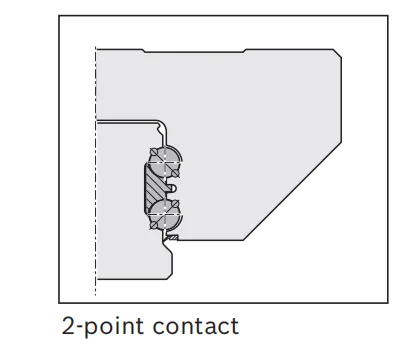
Chariot à double rangée de billes Les guides linéaires compacts DB représentent une solution hybride qui positionne stratégiquement les éléments roulants le long de la section médiane du rail. Cette conception unique améliore significativement la résistance au couple et la capacité de charge, particulièrement dans les applications verticales (axe Z) ou à haute charge. En utilisant quatre rangées de billes qui maintiennent deux points de contact dans toutes les directions de charge, les guides DB offrent une rigidité supérieure par rapport aux guides à billes standard tout en réduisant le frottement de glissement différentiel courant dans les conceptions multi-rangées traditionnelles. Cela en fait une alternative économique aux guides à rouleaux pour les scénarios impliquant des charges moyennes à lourdes ou des structures en porte-à-faux. En termes de coût, les guides DB occupent une position intermédiaire – plus abordables que les guides à rouleaux tout en offrant un équilibre favorable entre rigidité améliorée, capacité de charge accrue et frottement opérationnel réduit.
Résumé du classement des coûts :
Guide linéaire à billes < Guide linéaire DB < Guide linéaire à rouleaux
Ce classement reflète la complexité de fabrication typique et les exigences en matériaux pour chaque type. Les concepteurs doivent mettre en balance le coût avec la charge, la précision et les exigences de l'application.
Guide linéaire vertical vs Guide linéaire horizontal
Application des deux guides linéaires
| Facteur | Guide vertical | Guide horizontal |
|---|---|---|
| Direction de la charge | Axiale + Gravité | Principalement radiale |
| Guide à billes | Charges légères uniquement ; peut glisser sous poids lourd | Mouvement haute vitesse, précis, longue durée de vie |
| Guide à rouleaux | Optimal pour charges verticales élevées et rigidité | Charges lourdes ; vitesse modérée |
| Structure DB | Haute rigidité et résistance au couple ; alternative adaptée aux rouleaux | Optionnel ; augmente la rigidité si nécessaire |
| Gestion du frottement | Critique à minimiser | Important mais moins critique |
| Classement des coûts | DB < Rouleaux ; Billes pour charges légères | Billes < DB < Rouleaux |
Les applications verticales exigent une haute rigidité, une gestion des frottements et une distribution soigneuse des charges, tandis que les applications horizontales offrent plus de flexibilité dans le choix du guide.
Sélection des deux guides linéaires
Sélectionner le bon système de mouvement linéaire nécessite un équilibre stratégique entre charge, orientation, précision, vitesse et coût. Pour les applications verticales (axe Z), les guides à structure DB offrent un excellent compromis de capacité de charge et de rigidité pour un usage de moyenne puissance, tandis que les guides à rouleaux sont le choix premier pour les charges extrêmes exigeant une rigidité maximale. Les guides à billes peuvent suffire pour les charges verticales légères où la vitesse et la précision sont primordiales, à condition que des mesures comme l'ajustement de la précharge soient mises en œuvre. Dans les applications horizontales, les guides à billes excellent pour le mouvement haute vitesse et haute précision, tandis que les guides à rouleaux sont préférés pour la manipulation de charges horizontales lourdes. Les guides DB servent d'option polyvalente intermédiaire dans les deux orientations, offrant une rigidité améliorée par rapport aux guides à billes standard sans le coût complet des guides à rouleaux. Les considérations supplémentaires clés incluent : opter pour des guides à rouleaux ou DB pour les longues courses afin de maintenir l'alignement, privilégier les guides à billes à faible frottement pour les charges dynamiques élevées, et aligner le choix avec le budget – où les guides à billes sont les plus économiques, les structures DB offrent une amélioration équilibrée, et les guides à rouleaux justifient leur coût plus élevé dans les scénarios les plus exigeants à haute charge.
Erreurs courantes
- Utiliser des guides à billes standard pour des charges verticales lourdes sur l'axe Z → peut provoquer un glissement ou un jeu accru
- Utiliser des guides DB de faible capacité pour des charges horizontales importantes → peut augmenter le frottement de précharge
- Négliger la précision d'installation → même les guides DB ou à rouleaux peuvent développer du jeu latéral s'ils sont montés incorrectement
Il n'existe pas un seul type de guide “ idéal ” ; la sélection dépend de l'orientation, de la charge, de la précision et des considérations de coût :
Applications verticales : les guides DB ou à rouleaux surpassent généralement les guides à billes dans les scénarios de charge lourde et de couple critique
Applications horizontales : les guides à billes sont économiques pour les charges légères, tandis que les guides à rouleaux ou DB conviennent aux charges plus lourdes ou aux applications nécessitant une rigidité élevée
Perspective des coûts : Bille < DB < Rouleau. Les concepteurs doivent équilibrer coût et performance en fonction de la charge, de l'orientation et des exigences de précision.
DTX-LG, en tant qu'entreprise de rails linéaires, propose une gamme complète de guides linéaires (billes, rouleaux, DB) pour applications verticales et horizontales, garantissant précision, stabilité et longue durée de vie. Nos ingénieurs peuvent aider à sélectionner la solution de guide la plus rentable et adaptée à l'application, optimisant les performances tout en minimisant les dépenses inutiles.