
-
01/22/2026
- 0 Kommentar
Linearschienen vs. Linearstangen
As a Senior Engineering Director with over 15 years of experience in industrial equipment design, production, and optimization, I have overseen countless projects where the choice between linear rails and linear rods directly impacted equipment performance, reliability, and total cost of ownership (TCO). Linear rails (also called linear motion rails, linear guide rails, or linear slide guide rails) and linear rods (also known as linear shafts, linear guide shafts, or linear slide shafts) are both core components for linear motion systems, but they are not interchangeable—each excels in specific scenarios, and misselection can lead to costly rework, premature failure, or underperformance. This is especially critical when evaluating linear rails and bearings, linear rods and bearings, or linear bearing rail systems, as these component pairings define motion system capability. In this article, I will break down the fundamental differences between linear rails and linear rods, explore what is a linear guide and what is a linear bearing, and detail performance trade-offs, application boundaries, and key selection principles from an engineering leadership perspective—helping teams make strategic, data-driven decisions that align with project goals, whether selecting linear rails for CNC, heavy duty linear guide rails, or affordable cheap linear guide options.
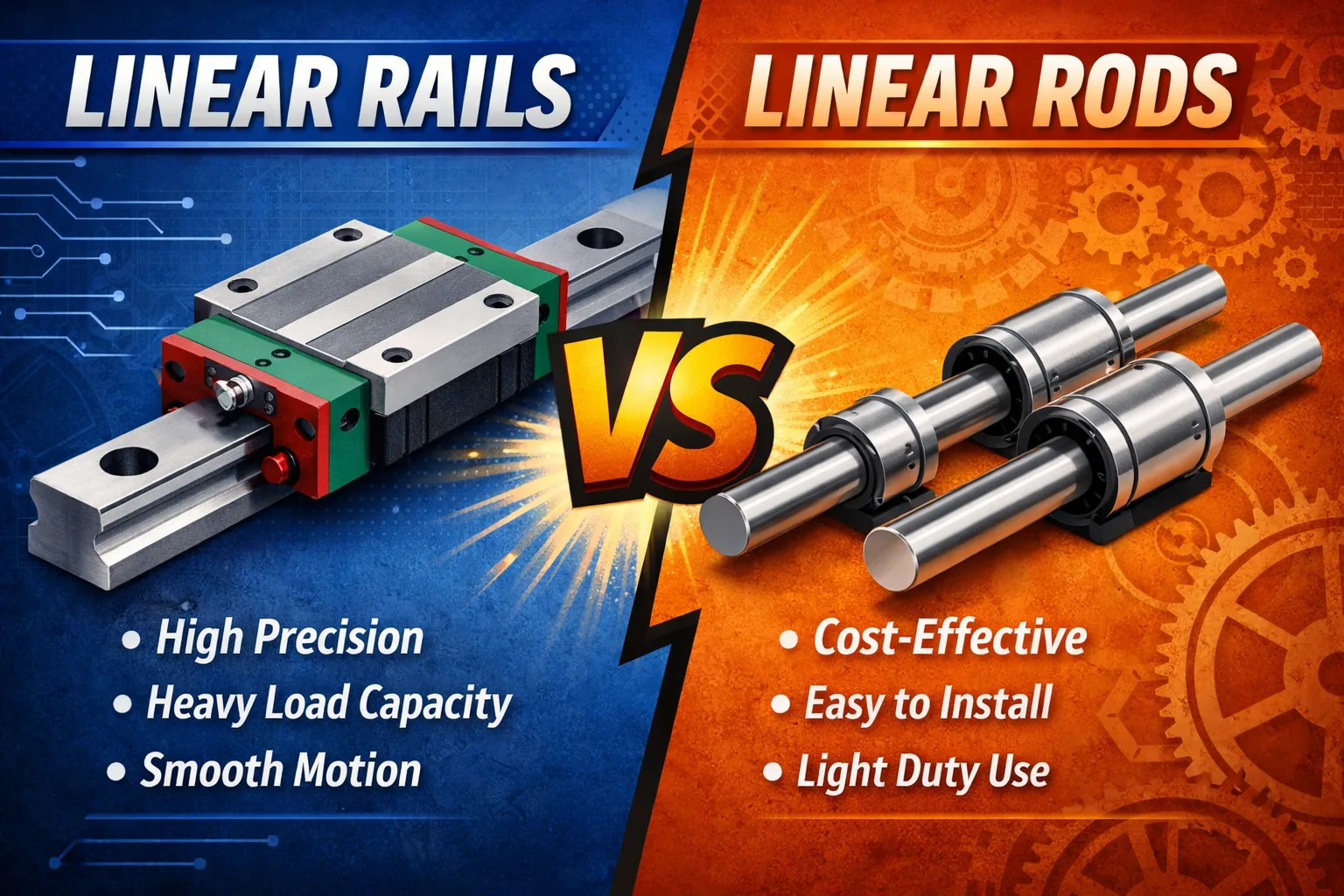
The Core Difference
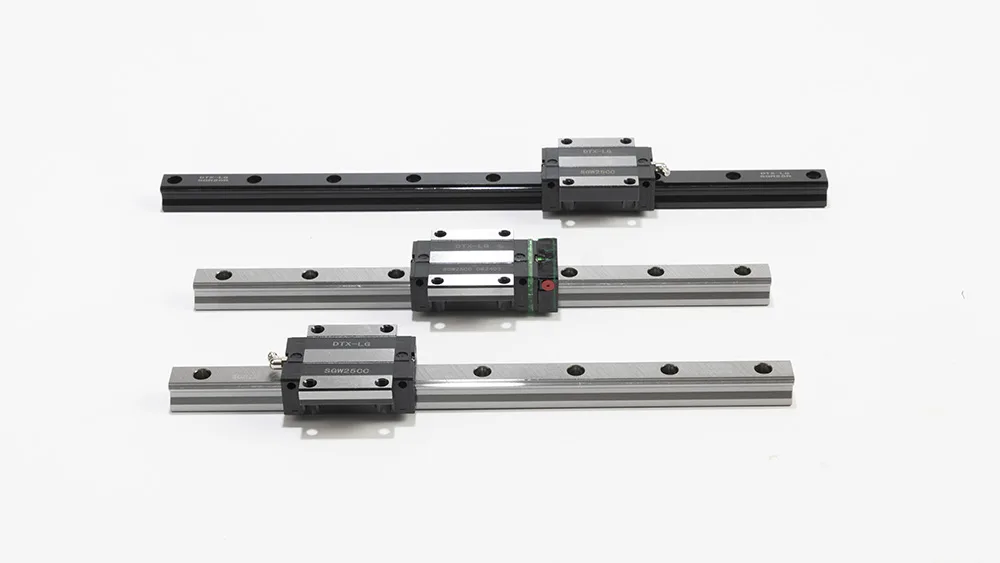
What is Linear Rails (Linear Guides)?
what is Linear Rods (Linear Shafts)?
Linear rods (also called linear guide shafts, linear slide shafts, or simply linear rod) are simple, cylindrical shafts (precision-ground or polished) paired with linear rod bearing components—most commonly linear bearings and rods, rail linear bearing setups, or bearing guide rails that act as supports. Unlike linear rails, linear rods are a “component-level” solution—they require external supports (e.g., end blocks, brackets) to maintain alignment, and their performance depends heavily on the precision of the supporting structure and the quality of the linear rod bearing pairing. This design prioritizes simplicity, cost-effectiveness, and compactness, making linear rods and bearings a popular choice for small, space-constrained applications.
Linear rods operate on a single-axis, point-contact principle (between the linear rod bearing and the rod’s surface). While a high-quality linear rod paired with a precision linear bearing can achieve moderate precision (±0.01mm repeatability), their rigidity and load-bearing capacity are limited by the linear rod’s diameter and the linear rod bearing type. Plain linear rod bearing options are cost-effective but prone to wear in high-speed applications, while ball-based linear bearing rail systems offer lower friction but require more frequent lubrication and protection from contaminants. Linear rods and bearings are often used in simple linear motion systems, such as manual assembly stations or low-speed conveyors, where precision and load capacity requirements are moderate. Linear tracks for linear rods are typically simpler than those for linear rails, focusing on stable support rather than integrated motion control.
What Matters for Engineering Leaders?
Performance Metric | Linear Rails (e.g., CNC linear guide rails, precision linear guide) | Linear Rods (with linear rod bearing, linear bearings and rods) |
Precision (Repeatability/Accuracy) | High (±0.001–±0.01mm); consistent across travel (ideal for precision linear guide, CNC linear slide applications) | Moderate (±0.01–±0.1mm); dependent on support alignment and linear rod bearing quality |
Rigidity & Load Capacity | High; multi-contact design handles radial/axial loads and torque (excellent for heavy duty linear guide rails, supported linear rail) | Low to Moderate; limited by linear rod diameter and linear rod bearing type |
Friction & Speed | Low friction; suitable for high-speed, continuous motion (e.g., linear ball guide, CNC linear slide) | Higher friction (plain linear rod bearing); ball-based linear bearing rail offers low friction but lower durability |
Upfront Cost | Higher (2–5x more than linear rods of similar size); varies by linear rail types, materials (stainless steel linear guide rails cost more than standard), and linear rail sizes | Lower; simple design and fewer components (linear rods and bearings are more affordable than linear rail systems) |
Maintenance & TCO | Low maintenance; built-in protection reduces wear; longer lifespan (5–10 years) (applies to most linear rail systems, including stainless steel linear guide rails) | Higher maintenance; linear rod bearing wears faster; support alignment may require rework; shorter lifespan (2–5 years) (common for linear rods and bearings setups) |
Installation & Integration | Simpler; modular design requires minimal alignment (ideal for CNC linear guide rails, linear rail slides) | More complex; requires precision alignment of supports and linear rod bearing components |
Precision and Rigidity: Non-Negotiable for High-Performance Systems
Cost vs. TCO: The Engineering Director’s Priority
Installation and Scalability: Efficiency for Engineering Teams
When to Choose Linear Rails vs. Linear Rods
Choose Linear Rails If
- Your application requires high precision (repeatability ≤ ±0.01mm) or consistent positioning across long travel lengths (≥1m)—ideal for precision linear guide, linear ball guide, or CNC linear guide rails applications.
- The system operates under dynamic loads (e.g., high-speed acceleration, cutting forces, torque) or heavy loads (≥50kg per axis)—suited for heavy duty linear guide rails, supported linear rail, or robust linear rail systems.
- You need low maintenance and long lifespan (≥5 years) for 24/7 or high-duty-cycle operations (applies to most linear rail types, including stainless steel linear guide rails and linear rail slides).
- Scalability is a priority (e.g., future upgrades to dual-rail configurations, additional linear rail bearings, or switching to larger linear rail sizes).
- Examples: CNC machining centers (with CNC linear guide rails, linear rails for CNC, or CNC linear slide components), robotic arms, semiconductor wafer handlers, metrology equipment, high-speed packaging lines, corrosive-environment applications (using stainless steel linear guide rails), and heavy-duty material handling systems (using heavy duty linear guide rails).
Choose Linear Rods If
- Your application has low precision requirements (repeatability ≥ ±0.01mm) and operates at low speeds or low duty cycles—suitable for linear rods and bearings or basic linear bearing track setups.
- Space is at a premium (e.g., compact equipment, small-diameter linear slide shafts ≤10mm) where linear rail sizes are too large.
- Upfront cost is the primary constraint, and maintenance frequency is manageable (e.g., quarterly linear rod bearing checks or replacements)—linear rods and bearings are more affordable than linear rail systems.
- The system handles light loads (≤50kg per axis) and no significant torque or dynamic forces—basic linear rod bearing pairings are sufficient.
- Examples: Material handling carts (using linear rods and bearings), manual assembly stations, low-speed conveyor guides (with linear bearing track components), prototype machines (using simple linear rod setups), simple linear actuators (with linear slide shafts), and compact devices where linear rail sizes are impractical.
Selection Best Practices
- Beginnen Sie mit den Systemanforderungen, nicht mit den Komponentenkosten: Definieren Sie zunächst Ihre Anforderungen an Präzision, Last, Geschwindigkeit und Lebensdauer – entscheidend für die Wahl zwischen verschiedenen Linearführungstypen (z. B. Präzisionslinearführung vs. günstige Linearführung) oder Linearstangen und Lagern. Erst nach Klärung dieser Punkte sollten Sie die Kosten bewerten. Die falsche Auswahl aufgrund eines Fokus auf die Anschaffungskosten (z. B. die Wahl von Linearstangen und Lagern anstelle von CNC-Linearführungsschienen für eine präzise CNC-Anwendung) ist der häufigste Fehler, den ich beobachte.
- Testen Sie unter realen Bedingungen: Für kritische Anwendungen (z. B. CNC-Linearführungsschienen, Hochlast-Linearführungsschienen) testen Sie sowohl Linearführungssysteme als auch Linearstangen und Lager in Ihrer tatsächlichen Betriebsumgebung (z. B. mit Staub, Vibrationen oder Temperaturschwankungen). Labortests spiegeln nicht immer die Leistung unter realen Bedingungen wider, insbesondere hinsichtlich des Verschleißes von Linearstangenlagern oder der Korrosionsbeständigkeit von Edelstahl-Linearführungsschienen.
Arbeiten Sie mit vertrauenswürdigen Lieferanten zusammen: Hochwertige Linearführungsschienen von etablierten Marken wie THK, HIWIN und SKF – sowie Linearstangen und Lager von Bosch Rexroth und Misumi – sind für gleichbleibende Qualität und lange Lebensdauer bekannt.
Gleichzeitig sollten Entwicklungsteams aufstrebende Linearführungshersteller mit langjähriger Produktionserfahrung, wie z. B. DTX-LG, nicht übersehen. Diese neueren Marken bieten oft austauschbare Designs, stabile Qualitätskontrolle und ein wettbewerbsfähigeres Preis-Leistungs-Verhältnis, was sie zu einer praktischen Alternative für CNC-Linearführungsschienen und andere Anwendungen mit hoher Einschaltdauer macht.
Unabhängig vom Reifegrad der Marke sollten Sie in anspruchsvollen Umgebungen auf kostengünstige, generische Linearführungslager oder Linearstangenlagerkomponenten verzichten, da ungleichmäßige Toleranzen und Materialqualität die Lebensdauer erheblich verkürzen und die Gesamtbetriebskosten erhöhen können.
- Berücksichtigen Sie die Integration mit anderen Komponenten: Stellen Sie sicher, dass die gewählte Komponente nahtlos mit Ihrem Motor, Aktuator und Steuerungssystem zusammenarbeitet. Linearführungssysteme (einschließlich Linearschlitten, Linearkugelführungsmodelle) passen für CNC-Linearschlittenanwendungen oft besser zu präzisen Servomotoren, während Linearstangen und Lager mit einfacheren Schrittmotoren kompatibel sind. Berücksichtigen Sie auch die Größen der Linearführungsschienen und die Durchmesser der Linearstangen, um die Kompatibilität mit vorhandenen Halterungen sicherzustellen.
- Planen Sie Wartung ein: Beziehen Sie Wartung in Ihre Berechnung der Gesamtbetriebskosten (TCO) ein. Linearführungssysteme (sogar günstige Linearführungsoptionen) reduzieren die Wartungskosten für Arbeitskraft, da häufige Ersetzungen von Linearstangenlagern entfallen – ein Punkt, der bei reinen Anschaffungskostenvergleichen oft übersehen wird. Für korrosive Umgebungen reduzieren Edelstahl-Linearführungsschienen die Wartung durch ihre Beständigkeit gegen Rost und Verschleiß.
Linearführungsschienen und Linearstangen sind beide wesentliche Lösungen in Linearbewegungssystemen, doch ihre Eignung hängt von den Anwendungsanforderungen und den langfristigen Projektzielen ab. Ob hohe Präzisionsleistung, Kosteneffizienz oder Hochlastfähigkeit Priorität haben – Entwicklungsteams müssen mehr als nur die Anschaffungskosten bewerten und stattdessen den Fokus auf die Gesamtbetriebskosten (TCO), Zuverlässigkeit und Skalierbarkeit über den gesamten Lebenszyklus des Systems legen.
Linearführungsschienen – einschließlich CNC-Linearführungsschienen, Hochlast-Linearführungsschienen und Edelstahl-Linearführungsschienen – sind die bevorzugte Wahl für präzisionskritische, hoch belastete Anwendungen mit hoher Einschaltdauer, bei denen Genauigkeit, Haltbarkeit und geringer Wartungsaufwand nicht verhandelbar sind. Im Gegensatz dazu eignen sich Linearstangen und Lager gut für kompakte, gering belastete und kostenbewusste Anwendungen, bei denen eine moderate Präzision akzeptabel ist.
Durch ein klares Verständnis der funktionalen Unterschiede zwischen Linearführungen und Linearführungen (Lagern), die Bewertung von Schienengrößen und Wellendurchmessern sowie die Anwendung strukturierter Auswahlmethoden können Entwicklungsteams kostspielige Kompromisse im Design vermeiden und Systeme liefern, die über Jahre zuverlässig, effizient und kosteneffektiv arbeiten.